
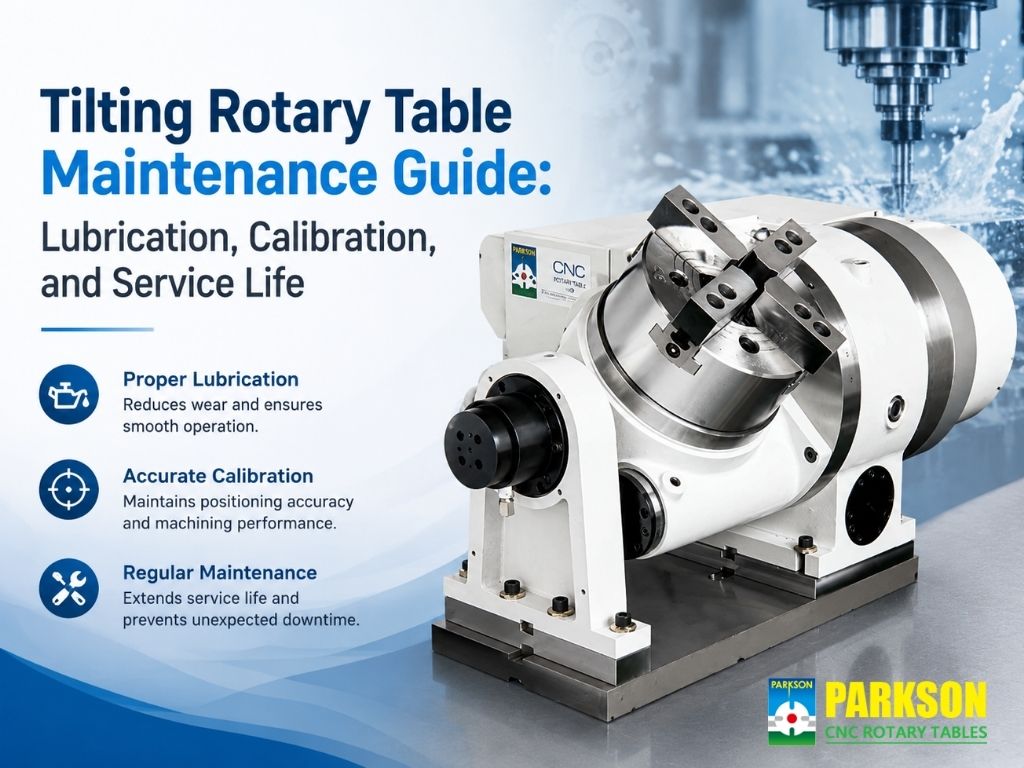
Modern CNC machining depends on consistent accuracy, stable rotary motion, and reliable equipment performance. A tilting rotary table plays a critical role in 4-axis and 5-axis machining by providing precise workpiece positioning for complex multi-face and simultaneous machining operations.
Like any precision mechanical system, a tilting rotary table requires regular maintenance to maintain its positioning accuracy, structural rigidity, and long-term reliability. While high-quality rotary tables are designed for years of operation, improper lubrication, neglected inspection, or inaccurate calibration can gradually reduce machining performance and increase maintenance costs.
This guide explains the key maintenance practices manufacturers should follow to maximize the performance and service life of a tilting rotary table.
Why Regular Maintenance Matters
Many manufacturers only inspect their rotary tables after machining accuracy begins to decline. However, by the time positioning errors or abnormal vibration become noticeable, internal components may already have experienced unnecessary wear.
Preventive maintenance helps keep the rotary table operating within its designed performance range while reducing unexpected downtime.
A well-maintained tilting rotary table provides several long-term benefits:
-
Stable positioning accuracy
-
Longer bearing and transmission life
-
Consistent clamping performance
-
Lower repair costs
-
Improved machine availability
Rather than treating maintenance as a response to problems, manufacturers should view it as part of their overall machining quality strategy.
Lubrication: The Foundation of Reliable Performance
Proper lubrication is one of the most important maintenance tasks for a tilting rotary table.
Depending on the rotary table design, lubrication protects critical components such as:
-
Worm gears
-
Bearings
-
Tilting mechanisms
-
Gear transmission systems
Adequate lubrication reduces friction, minimizes heat generation, and helps prevent premature wear during continuous machining.
Good Lubrication Practices
Instead of waiting for signs of wear, manufacturers should establish a regular lubrication schedule based on machine operating hours and the recommendations provided by the equipment manufacturer.
Operators should also monitor for:
-
Oil contamination
-
Oil leakage
-
Unusual lubricant discoloration
-
Insufficient lubricant levels
Keeping the lubrication system clean is equally important, as contaminants can accelerate component wear.
Calibration Keeps Machining Accuracy Consistent
Even a structurally rigid rotary table can gradually lose positioning accuracy after extended operation.
Repeated machining loads, thermal expansion, accidental impacts, or long production cycles may cause small positioning deviations that affect finished part quality.
Periodic calibration helps verify:
-
Rotary positioning accuracy
-
Tilting angle accuracy
-
Zero-point repeatability
-
Encoder performance
-
Rotary axis alignment
For manufacturers producing precision molds, aerospace components, or medical parts, calibration should become part of routine preventive maintenance rather than corrective maintenance.
Routine Inspection Helps Detect Problems Early
Many rotary table failures begin with small warning signs that are often overlooked.
Routine inspections allow maintenance personnel to identify these issues before they develop into major repairs.
Inspection items typically include:
-
Loose mounting bolts
-
Abnormal vibration
-
Unusual operating noise
-
Hydraulic or pneumatic leakage
-
Surface corrosion
-
Electrical cable condition
-
Encoder connector inspection
Small abnormalities detected early can often be corrected quickly with minimal production interruption.
Environmental Conditions Also Affect Service Life
Maintenance is not limited to the rotary table itself. The surrounding machining environment also has a significant influence on long-term reliability.
Metal chips, coolant, abrasive dust, and excessive humidity may all affect mechanical performance if they accumulate around moving components.
Manufacturers should ensure:
-
Chips are removed regularly
-
Coolant does not accumulate around seals
-
Electrical connectors remain dry
-
Protective covers remain intact
-
Work areas are kept clean
Good housekeeping practices contribute directly to equipment longevity.
Signs Your Tilting Rotary Table May Need Service
A rotary table rarely fails without warning. In many cases, performance gradually changes over time.
Manufacturers should pay attention to symptoms such as:
| Warning Sign | Possible Cause |
|---|---|
| Reduced positioning accuracy | Calibration drift or component wear |
| Increased vibration | Bearing wear or loosened components |
| Unusual operating noise | Gear or bearing problems |
| Oil leakage | Damaged seals or lubrication system issues |
| Higher operating temperature | Insufficient lubrication or excessive load |
| Surface finish deterioration | Rotary positioning instability |
Early diagnosis often prevents expensive repairs and unexpected machine downtime.
Expected Service Life Depends on Proper Maintenance
There is no universal service life for a tilting rotary table.
Actual longevity depends on factors including:
-
Operating hours
-
Cutting conditions
-
Workpiece weight
-
Maintenance frequency
-
Lubrication quality
-
Installation accuracy
A properly maintained rotary table can continue operating reliably for many years while maintaining stable machining accuracy.
Preventive maintenance almost always costs significantly less than emergency repair or unexpected production stoppages.
PARKSON's Approach to Rotary Table Reliability
PARKSON WU INDUSTRIAL CO., LTD. designs CNC rotary tables with durability, machining stability, and long-term reliability in mind.
PARKSON's tilting rotary tables are engineered with features that support consistent performance in demanding machining environments, including:
-
High-rigidity structural construction
-
Precision rotary positioning mechanisms
-
Stable worm gear transmission systems
-
Solutions for both 4-axis and 5-axis machining
-
Compatibility with major CNC control systems
Combined with proper maintenance and regular inspection, these engineering features help manufacturers maximize equipment uptime and machining performance throughout the rotary table's service life.
Frequently Asked Questions (FAQ)
1. How often should a tilting rotary table be lubricated?
Lubrication intervals depend on machine usage, operating conditions, and the manufacturer's recommendations. High-duty production environments typically require more frequent inspection.
2. Does every tilting rotary table require periodic calibration?
Yes. Even high-precision rotary tables should be checked periodically to ensure positioning accuracy remains within specification.
3. What is the most common cause of reduced rotary table accuracy?
Common causes include insufficient lubrication, component wear, improper maintenance, or calibration drift after long-term operation.
4. Can coolant damage a rotary table?
Coolant itself is not necessarily harmful, but poor sealing, contamination, or coolant accumulation around moving components may reduce service life.
5. How can manufacturers extend the service life of a tilting rotary table?
Regular lubrication, scheduled calibration, routine inspections, proper cleaning, and operating the rotary table within its rated capacity are the most effective ways to maximize long-term performance.
Conclusion
A tilting rotary table represents a long-term investment in machining capability, and its performance depends not only on engineering design but also on proper maintenance.
By following a preventive maintenance strategy that includes lubrication, calibration, routine inspections, and environmental control, manufacturers can maintain positioning accuracy, reduce unexpected downtime, and significantly extend equipment service life.
For precision machining environments where reliability is critical, consistent maintenance is one of the simplest and most cost-effective ways to protect both equipment performance and production quality.
Keep Your Rotary Table Performing at Its Best with PARKSON
PARKSON provides high-quality tilting rotary tables designed for long-term reliability in demanding CNC machining environments. Contact our technical team to learn more about selecting the right rotary table or maintaining your existing equipment for maximum performance.